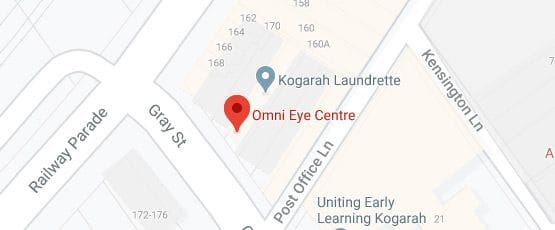
If you’re booking an appointment with a corneal specialist in Kogarah at Omni Eye Centre, a referral from your GP or optometrist is usually required to access Medicare rebates. Patients from the St George and Southern Sydney area without a referral can still contact our clinic, and our team will assist in arranging appropriate care pathways.
Patients searching for keratoconus diagnosis in Kogarah or the St George region often report early symptoms such as blurred or distorted vision, increased glare, light sensitivity, and frequent prescription changes. Early detection by an experienced corneal specialist is essential to slow progression and protect long-term vision.
At Omni Eye Centre Kogarah, keratoconus is diagnosed using advanced corneal topography and imaging technology. For patients across Southern Sydney, our clinic provides detailed corneal mapping to detect early changes and monitor progression, ensuring accurate diagnosis and tailored treatment plans.
Keratoconus treatment in Kogarah may include specialised contact lenses, corneal cross-linking to strengthen the cornea, and surgical options for advanced cases. At Omni Eye Centre, we provide evidence-based treatment options for patients across the St George and Southern Sydney region, tailored to individual needs.
If you’ve been diagnosed with a corneal condition and are unsure about your treatment, seeking a second opinion from a corneal specialist in Kogarah can provide clarity and confidence. Omni Eye Centre regularly supports patients from the St George area seeking expert review of complex or ongoing eye conditions.
A corneal assessment at our Kogarah eye clinic includes a comprehensive eye examination, advanced corneal imaging, tear film evaluation, and a detailed review of your symptoms and history. Patients from Southern Sydney benefit from precise diagnostics and personalised treatment planning.
Dry eye treatment in Kogarah at Omni Eye Centre focuses on identifying the underlying cause of ocular surface disease. While chronic in nature, dry eye can be effectively managed with tailored treatment plans designed to improve comfort, vision, and long-term eye health for patients across St George and surrounding suburbs.
Yes, Omni Eye Centre Kogarah provides vision testing for driver’s licence assessments, including private and heavy vehicle requirements, for patients across the St George region. We are also an approved provider for aviation-related eye examinations in line with Civil Aviation Safety Authority (CASA) standards.
A comprehensive ophthalmologist is a medically trained eye specialist who diagnoses, treats, and manages a wide range of eye conditions, both medical and surgical. Unlike general eye care providers, they are qualified to manage complex diseases affecting the eye, including the cornea, retina, and anterior segment, while also providing routine eye care and vision assessments.
A regular eye exam typically focuses on vision testing and updating your glasses or contact lens prescription. A comprehensive eye exam, however, includes a detailed assessment of your overall eye health, checking for early signs of eye disease such as glaucoma, macular degeneration, and corneal conditions. It often involves advanced diagnostic imaging and a more in-depth clinical evaluation.
Vision changes can begin as early as your 40s, most commonly due to presbyopia (age-related difficulty focusing on near objects). However, certain eye conditions can develop earlier, which is why regular eye examinations are important at every stage of life. The risk of more serious eye diseases increases with age, particularly after 60.
An ophthalmologist manages a wide range of eye conditions, including:
- Cataracts
- Glaucoma
- Macular degeneration
- Diabetic eye disease
- Keratoconus and corneal disorders
- Dry eye and ocular surface disease
- Eye infections and inflammation
They are also trained to perform surgical procedures when required.
Four of the most common eye conditions include:
- Refractive errors (short-sightedness, long-sightedness, astigmatism)
- Cataracts
- Glaucoma
- Age-related macular degeneration
These conditions vary in severity but can significantly impact vision if left untreated.
The cornea is the clear, dome-shaped surface at the front of the eye that helps focus light. The anterior segment refers to the front portion of the eye, including the cornea, iris, lens, and surrounding structures. Conditions affecting this area—such as keratoconus, corneal scarring, and dry eye—can significantly impact vision and comfort.
Three of the leading causes of vision impairment worldwide are:
- Cataracts
- Glaucoma
- Age-related macular degeneration
Early detection and management are key to preventing vision loss from these conditions.
A complex eye condition is one that is difficult to diagnose or manage and may require specialised expertise, advanced imaging, or ongoing care. Examples include progressive keratoconus, severe ocular surface disease, corneal infections, and cases where previous treatments have not been successful.
Some of the most serious eye conditions include glaucoma, advanced macular degeneration, retinal detachment, severe corneal disease, and eye cancers. These conditions can lead to permanent vision loss if not diagnosed and treated early, which is why timely specialist care is essential.